Skip to content

La Cornue Griddle or Simmer Plate Heating Unevenly What to Check

A cast-iron plate or griddle that heats unevenly is often a preheating, leveling or cleaning issue, and this guide shows what to check safely.

At a glance

Article overview

La Cornue Griddle or Simmer Plate Heating Unevenly: What to Check
Quick answer

A cast-iron plate or griddle that heats unevenly is often a preheating, leveling or cleaning issue, and this guide shows what to check safely.

When a La Cornue griddle or simmer plate heats unevenly, the cause is usually something about setup or use: a plate that was not preheated long enough, a range that is not level, a pan or griddle that sits unevenly, or a surface that behaves as designed. Check preheating, leveling and cleanliness first, and call for service if a burner under the plate looks wrong.
Guide

How is a cast-iron plate meant to heat?

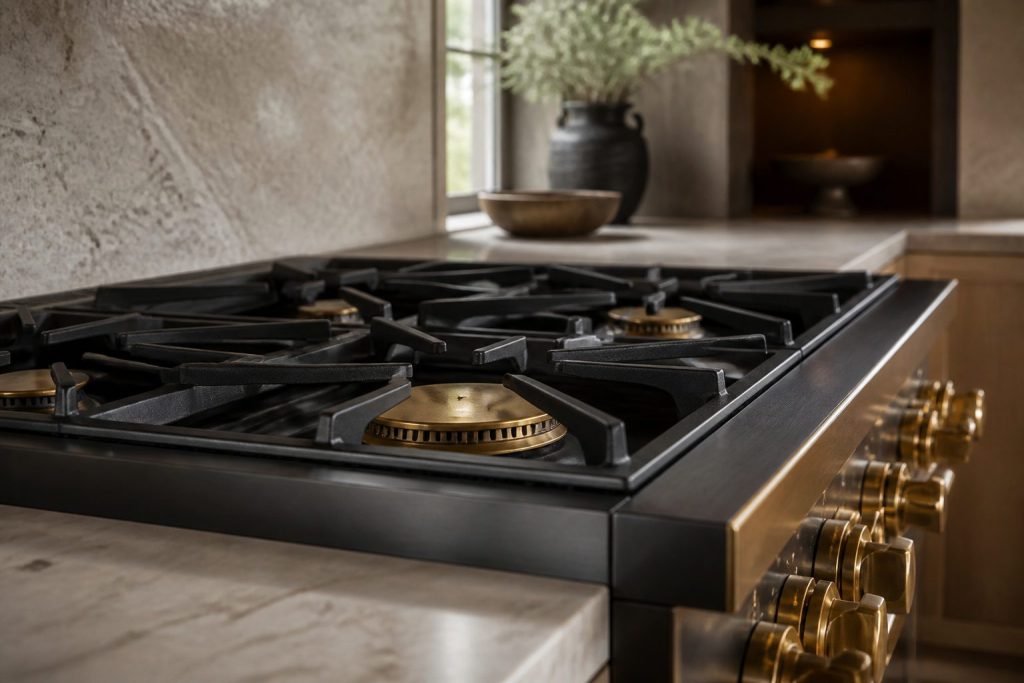
A cast-iron plate does not heat like a burner. The Chateau cooking notes describe the cast-iron plaque, often called a French top, as a source of gentle indirect heat, and say to preheat it for about 10 minutes on high. The hottest area sits over the heat source, with cooler areas toward the edges. That gradient is a feature, because it lets you move a pot from searing to simmering without touching the knob. The Chateau guide treats the cast-iron gas simmering plate and brass burners as deliberate material choices, and the cooking notes say electric cast-iron burners suit simmering, with a thermostat that cycles to hold temperature.

On a plain reading, a cooler corner or a warm center is normal. A real problem is a change from how the surface used to behave, or a flame under the plate that looks irregular.

Guide

Optional griddles

A CornuFe dual-fuel guide describes an optional griddle that fits on the left-hand grids. It says to preheat for at most 5 minutes, to leave space around it for gases to escape, and never to run two side by side. Overheating a griddle or crowding it can produce hot spots and warping that look like a heating fault. The same guide says to let it cool completely before cleaning. For a teppanyaki surface, the Chateau cleaning sheet advises ice cubes on the hot surface after use, scraping grease into the channel and finishing with a non-abrasive sponge when it is cool.

Guide

Level, seating and contact

An unlevel range sends oil and heat to one side. The CornuFe oven guidance includes a dish-of-water level test for ovens, and the same idea applies to a plate or griddle: pool a little water or oil and see where it drifts. If it runs to one side, tell whoever installed or levels the range. Make sure the plate or griddle sits flat on its supports and that nothing, such as a crumb layer or dried residue, lifts it.

Guide

Burner flame under the surface

Gas flames tell you a lot. The Chateau guide says a natural-gas flame should be bluish with at most a slight yellowish fringe, propane may look softer with yellowish tips, and a long white-tipped flame means call for service. Burner heads must be clean, dry and seated; the Chateau guide notes caps must be locked in position for ignition, and a CornuFe guide says holes must be free of debris. The low-flame setting is adjusted at a valve bypass screw, a task the guide reserves for trained service personnel, so do not turn it.

Guide

Pans and food contact

Much of what looks like uneven plate heat is really a cookware problem. A CornuFe guide advises against unstable pans and gives minimum pan sizes for its burners, and a warped or small pan leaves part of the base off the heat. On a cast-iron surface, a thin pan will show the plate’s hot spots more than a thick one will. Check that the pan base is flat and sits fully on the plate, and that food is spread across the surface rather than piled into one zone. If you are searing, give the plate its full preheat first, because a partly warmed plate shows the biggest temperature differences.

Signs

Symptom guide

What you see What it can point to What you can check
Cool edges, hot center Normal gradient of a cast-iron plate Preheat about 10 minutes; move food to the zone you need
One side runs hot Range or plate not level Pool a little liquid and see where it runs
Griddle hot spots Overlong preheat or crowded placement Preheat at most 5 minutes; keep space around it
Yellow or long white flame Blocked ports or an air or gas issue Switch off; clean a cool head; call for service
Sticky residue patches Baked-on grease acting as insulation Clean once cool with a non-abrasive sponge
Guide

What a good result looks like

After a proper preheat, run a simple test: lay a thin layer of food across the surface, such as slices of bread, and watch the browning pattern. A smooth gradient from a hotter zone to a cooler one is expected. If one spot browns dramatically faster than the rest, or part of the surface stays pale even after a long preheat, write down where and note the burner or control involved. A photo helps the technician understand the pattern, and the information supports the diagnosis without any need to open the range.

Guide

When should you stop using a griddle or plate?

Stop using the surface if the flame looks abnormal, you smell gas, a plate is cracked, or the controls behave inconsistently. Do not reach into the burner area while another burner is on, since a CornuFe guide warns of shock risk when cleaning around a burner during use. For gas smell, leave the building and call the gas supplier from outside.

Guide

Frequently asked questions

Should the whole simmer plate be the same temperature?

Not necessarily. A cast-iron plate is hottest over its heat source and cooler toward the edges, which is part of how it works.

How long should I preheat the plate?

The Chateau cooking notes say about 10 minutes on high for the cast-iron plaque, and one CornuFe guide says at most 5 minutes for its optional griddle.

Can I clean a hot griddle with water?

Let it cool before cleaning, as the guides direct. For a teppanyaki surface, the cleaning sheet specifically uses ice cubes on the hot top.

Does an older uncoated plaque need special care?

Yes. The cleaning sheet says no water, wipe dry, rub with the grain and season it occasionally with food-safe mineral oil.

Need help now? Visit our services page or contact us.

Official manuals and support notes are available on La Cornue Support.

Get started

Need help with a La Cornue appliance?

Book a La Cornue service visit for a clear estimate and approval before any repair. Specialist technicians, clear diagnostics, and workmanship coverage on completed repairs.

FAQ

Frequently asked questions

Keep reading

Similar articles

View all articles

Get started

Ready to restore your La Cornue appliance?

Book a repair online or call us — clear estimates, approval before any work, and a workmanship warranty on completed repairs.

Book a repair

Tell us what’s wrong — we’ll take it from there

Share a few details and we’ll confirm an appointment. Prefer to talk? Call us and we’ll help right away.

Hours Mon–Sat: 8:00 AM – 7:00 PM
Service area Serving Miami, New York, Houston, Los Angeles and San Diego metro areas.
Response time Appointment timing depends on location, route capacity, appliance type, and parts needs.
Call Book a Repair