Skip to content

Caring for a La Cornue Range Top Enamel, Brass and Stainless Finishes

Cleaning routines for the enamel, brass, copper, plaque and glass surfaces on a La Cornue range top.

At a glance

Article overview

Caring for a La Cornue Range Top: Enamel, Brass and Stainless Finishes
Quick answer

Cleaning routines for the enamel, brass, copper, plaque and glass surfaces on a La Cornue range top.

Caring for a La Cornue range top comes down to matching the cleaner to the surface: warm mild soapy water and a microfiber cloth for enamel, metal polish applied with care for brass and copper, and no solvents, bleach or coarse abrasives on any of it. Let the range cool first, dry every part promptly, and never spray cleaner straight onto enamel. The manuals also say brass is meant to patina, so some change in color is expected.

Guide

Know the surfaces on your range

A range top can mix several materials. Chateau and CornuFe ranges use enameled panels and burner parts, solid-brass burner caps, a cast-iron plaque, known as a French top, on some models, and brass or copper trim. Induction models add a glass surface. Each one has its own routine in the cleaning notes, which is why a single all-purpose spray is a poor choice.

Before any thorough cleaning, the CornuFe guide says to turn off the circuit breaker and let the range cool. It also warns against cleaning or disassembling around a burner while another one is on, because of the shock risk.

Guide

How should you clean enamel on a range top?

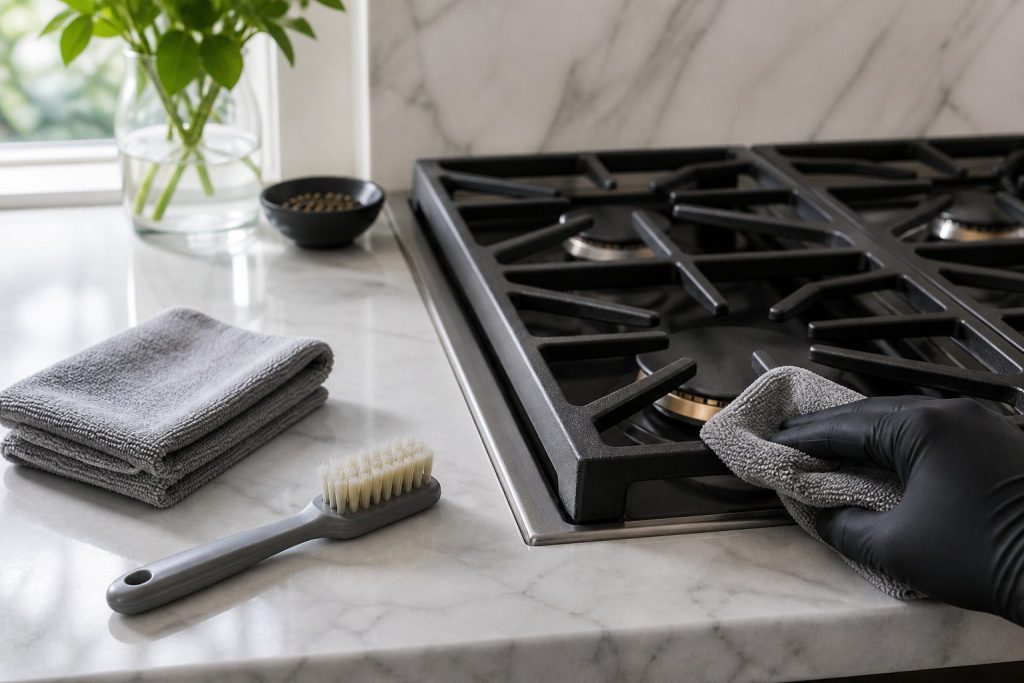
The cleaning guides give enamel panels a plain routine: warm, mild soapy water on a microfiber cloth, then dry promptly so water does not leave marks. Never spray cleaner directly onto enamel surfaces; apply it to the cloth. The CornuFe guide lists what to avoid on the range: paint solvents, caustic or chlorine-bleach cleaners and coarse abrasives, and it says not to mix cleaners. For the oven interior, the Chateau notes mention an enamel-safe degreaser and say that abrasive cleaners such as scouring powder may compromise the enamel seal.

Enamel burner grates and heads can go in the dishwasher, according to the CornuFe guide. After washing, burner heads must sit properly in the base, with the two pips fitting the two notches, and every part should be completely dry before it goes back.

Guide

How should you care for brass and copper trim?

Brass and copper trim is not lacquered. It patinas naturally, and the guides treat that as part of the material. If you prefer a brighter look, polish with a metal polish and do not let it dry on the surface. For hood trim, the CornuFe hood guide adds that fingerprints can etch brass permanently, so it suggests gloves and microfiber with an ammonia-free glass cleaner or Brasso. It also says the brass trim is not covered by the warranty.

Burner caps are a separate case. Wash gas burner caps in warm soapy water and make sure all holes around the cap are free of grease and debris. For burnt-on grease on solid-brass caps, the Chateau notes describe soaking in equal parts white distilled vinegar and water, boiling for 10 to 15 minutes, cooling before handling, then rinsing and drying.

Guide

Stainless parts, plaque and glass

The facts available for stainless finishes are limited. The manuals mention stainless baffle filters in the hoods, which are cleaned separately, but they do not set out a general stainless polish for the range. Check your own manual for which parts of your model are stainless and use only what it names.

If your plaque is nickel-coated, a damp soapy cloth does the daily work, a baking-soda paste handles deep stains, and abrasives stay out of the picture. An uncoated older plaque takes no water: wipe it dry, rub only with the grain, and season it occasionally with food-safe mineral oil. On induction glass, use a glass cooktop cleaner; a razor scraper may be used carefully around door gaskets, with a plastic blade as the alternative.

Surface Routine the manuals describe Avoid
Enamel panels Warm mild soapy water, microfiber, dry promptly Spraying cleaner directly; coarse abrasives
Brass and copper trim Metal polish, not left to dry Expecting it to stay bright without work
Brass burner caps Soapy water; vinegar-water soak for burnt-on grease Handling hot; leaving holes clogged
Nickel-coated plaque Damp soapy cloth; baking-soda paste Abrasives
Uncoated plaque Wipe dry; rub with the grain; mineral oil Water
Induction glass Glass cooktop cleaner Detergent on the first cleaning
Guide

A simple routine that protects the finish

Wipe up spills once the surface is cool instead of letting them bake on, since burnt-on residue is what leads to the harsher products the manuals warn about. Keep a dedicated microfiber cloth for enamel so grit from the burners does not scratch it. Do any deeper work, such as soaking caps or washing grates, in one session with the range switched off at the breaker, and reassemble only when everything is dry. If a cleaner is not named in your manual for a given surface, test a small hidden spot or leave it alone.

Guide

What cleaning cannot fix

A clean range top may still have a burner that does not light or a flame that looks wrong. Cleaning removes debris from the sparker and burner holes, which the troubleshooting list names as causes of non-lighting burners, but it does not repair a failed part. If a burner still will not light after the caps are seated and dry, treat that as a service question and do not poke into the burner base. Blocked ports can be cleared with fuse wire according to the CornuFe guide, but only when the range is cool and off.

Guide

Frequently asked questions

Why is my brass turning dark?

The manuals say brass and copper trim is not lacquered and patinas naturally. You can polish it, but the change is part of the metal.

Can I use oven cleaner on the range top?

The CornuFe guide warns against caustic and bleach cleaners, solvents and coarse abrasives. Use only what your manual lists for each surface.

Are burner parts dishwasher safe?

Enamel burner grates and heads can go in the dishwasher on the CornuFe range. Brass caps use the soap or vinegar methods above.

Should I clean while the range is warm?

No. Let the range cool, and turn off the circuit breaker before thorough cleaning.

Need help now? Visit our services page or contact us.

Official manuals and support notes are available on La Cornue Support.

Get started

Need help with a La Cornue appliance?

Book a La Cornue service visit for a clear estimate and approval before any repair. Specialist technicians, clear diagnostics, and workmanship coverage on completed repairs.

FAQ

Frequently asked questions

Keep reading

Similar articles

View all articles

Get started

Ready to restore your La Cornue appliance?

Book a repair online or call us — clear estimates, approval before any work, and a workmanship warranty on completed repairs.

Book a repair

Tell us what’s wrong — we’ll take it from there

Share a few details and we’ll confirm an appointment. Prefer to talk? Call us and we’ll help right away.

Hours Mon–Sat: 8:00 AM – 7:00 PM
Service area Serving Miami, New York, Houston, Los Angeles and San Diego metro areas.
Response time Appointment timing depends on location, route capacity, appliance type, and parts needs.
Call Book a Repair